Mold Removal in Harvest Hills, UT
Harvest Hills is a master-planned neighborhood on the north end of Saratoga Springs, built in the 2000s and 2010s growth wave that took the city from about 1,000 people in 2000 to nearly 18,000 in 2010. It is governed by a master homeowners association with sub-associations underneath it, like the 108-home Springs at Harvest Hills, and it was sold on views of Timpanogos across the lake, parks, and open space. The homes are stucco-and-stone two-stories with full basements, and most of those basements were finished by the first or second owner.
The ground under them is Lake Bonneville sediment, clay that takes water slowly and holds it. Shallow groundwater across the Utah Valley floor rises during the melt and after heavy rain, and the state geological survey lists it as the trigger for basement flooding in exactly this kind of neighborhood. The lake is close enough that a wet spring like 2023 pushes the water table up under the slab without a drop hitting the roof, and the burn-scar debris flows of September 2012 on the south end of the city showed what a single storm can do to a basement on this side of the lake.
A call to this site connects a Harvest Hills homeowner with an independent mold provider working in the area. The provider inspects and quotes; this site never touches the work.
Harvest Hills mold removal, clay ground and sump pumps
A sump that quit during the melt and a family room carpet that squished a week later is the classic basement mold remediation call, and the pad under that carpet is where the growth is. A basement bathroom on a cold exterior wall that never dries is bathroom mold removal work. After removal, mold damage repair on these lots often means hard flooring over a moisture barrier instead of new carpet.
Where to call in Harvest Hills
Exterior changes like a sump discharge line or a new window well cover go past the sub-association first, and The Springs at Harvest Hills posts its rules and contacts on its community site.
Call (385) 534-4662 to be connected with a local mold provider serving Harvest Hills.
Services Available in Harvest Hills
Mold Removal
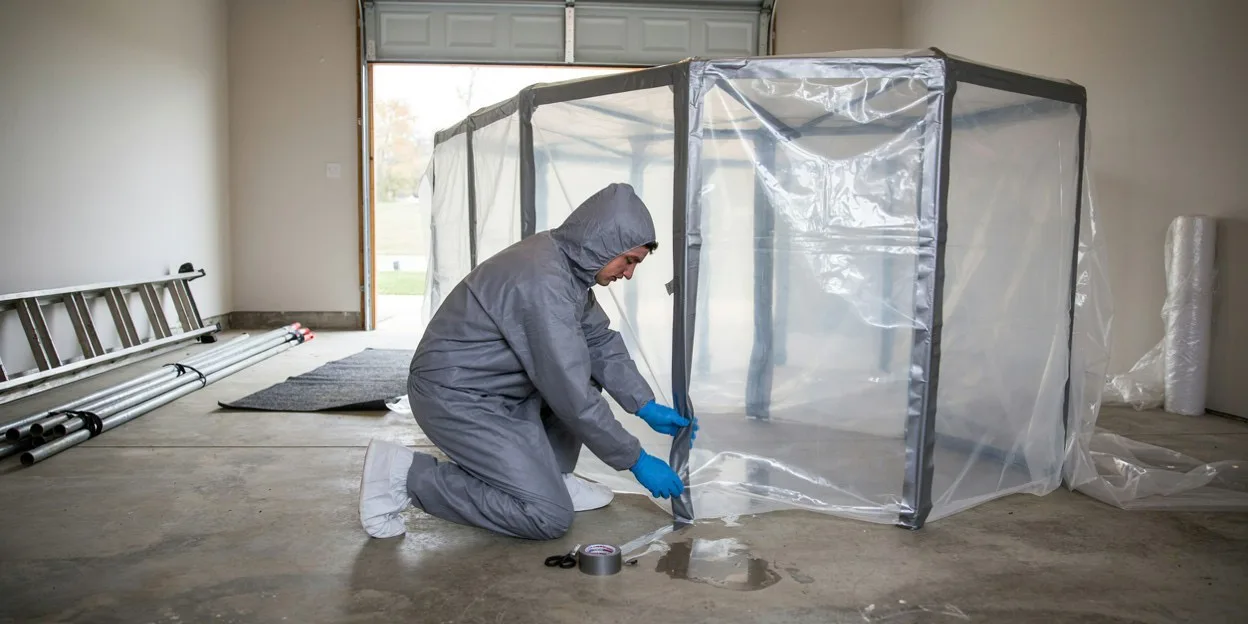
Containment, negative air, and removal of the wet drywall, carpet pad, and insulation that grew it, then cleaning and drying what stays.
Black Mold Removal
Dark growth handled under full containment with protective gear. Color does not name the species, and the work does not change because of it.
Basement Mold Remediation
Finished basements that took water from a window well, a seep, a sump, or a burst line, opened, cleared, and dried to the foundation.
Whole-Home Mold Remediation
Room-by-room containment and removal after a long leak, a winter pipe burst in an empty house, or a basement that flooded more than once.
Bathroom Mold Removal
Growth on ceilings, behind vanities, and inside walls from steam, a slow supply leak, or a fan that vents into the attic.
HVAC Mold Cleaning
Furnace cabinet, coil, humidifier, and duct cleaning when the smell comes with the blower, plus swamp-cooler pads and pans on older homes.
Mold Odor Removal
Finding and removing the wet material behind a musty smell in a basement or crawl space, then clearing the air instead of covering it.
Mold Damage Repair
Drywall, baseboard, insulation, and subfloor put back after removal, with the wall read dry before anything closes.